

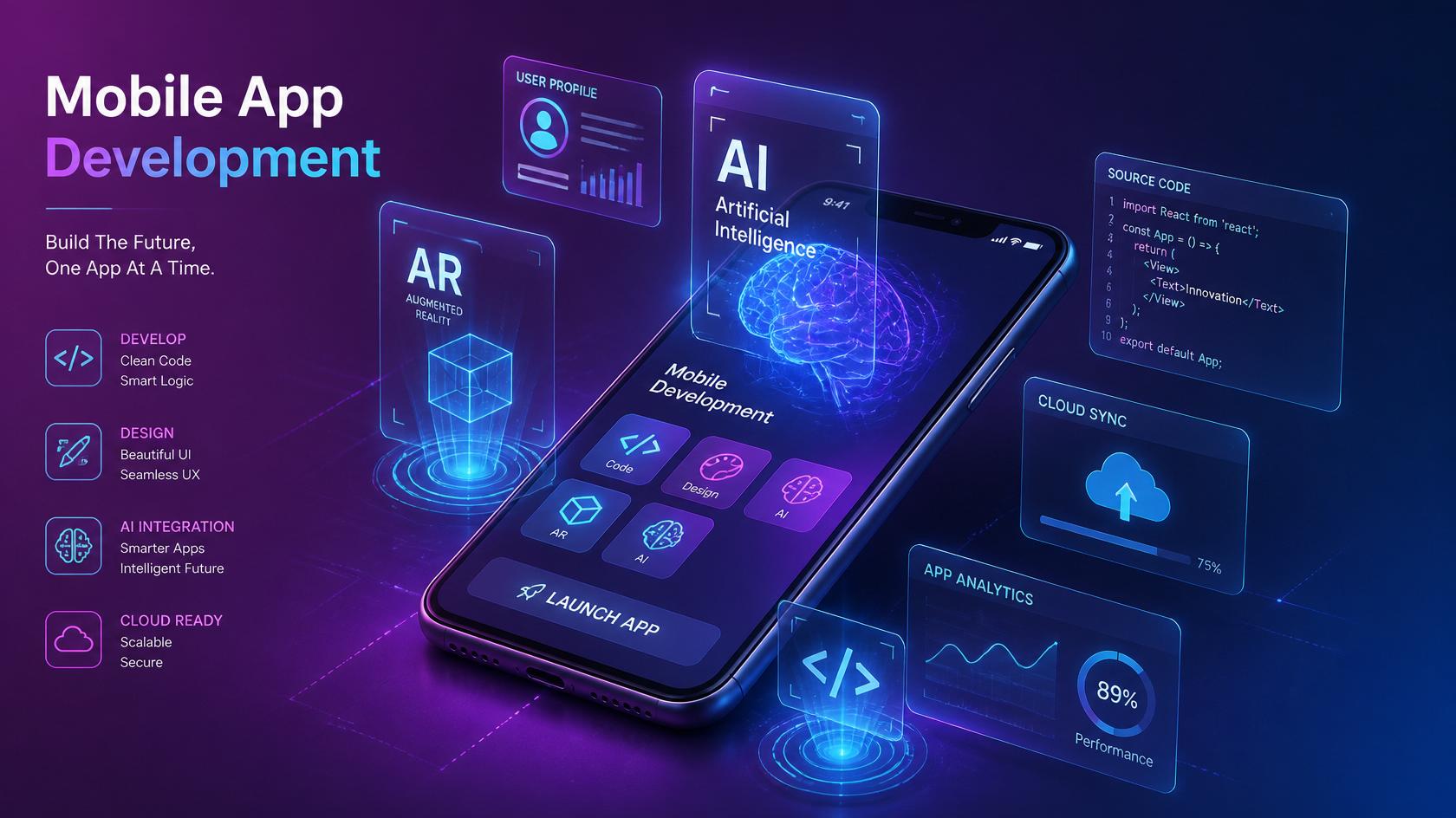
Trends in Mobile App Development for the Future
In an increasingly digital world, mobile apps have become central to how we interact with technology. As we look to the future, mobile app development is evolving rapidly, shaped by new technologies and shifting user expectations. In this blog, we’ll explore the key trends that are defining the future of mobile app development.
1. Artificial Intelligence and Machine Learning
AI is revolutionizing mobile apps by enabling personalized experiences. For instance, AI-driven recommendation systems, like those in streaming apps, tailor content to individual users. In the future, AI will further enhance automation, from intelligent chatbots to real-time language translation.
2. 5G Technology
The rollout of 5G networks is poised to transform app experiences. With faster speeds and lower latency, apps will become more responsive. For example, augmented reality (AR) apps will offer smoother, more immersive experiences. As 5G becomes mainstream, expect a surge in real-time collaboration apps and cloud-based mobile solutions.
3. Foldable and Flexible Screens
As foldable smartphones become more popular, app developers must adapt their designs. Apps will need to dynamically adjust between folded and unfolded states. A good example is Samsung’s Galaxy Fold, where apps seamlessly switch layouts. Developers must ensure a consistent user experience across these new form factors.
4. Internet of Things (IoT) Integration
Mobile apps are increasingly controlling IoT devices, from smart home gadgets to wearable tech. Imagine an app that not only tracks your fitness but also adjusts your smart thermostat based on your activity. This interconnected future will make apps central hubs for managing daily life.
5. Augmented Reality (AR) and Virtual Reality (VR)
AR and VR are no longer just for gaming—they’re reshaping shopping, education, and healthcare apps. For example, furniture apps now allow users to visualize how a sofa looks in their living room before buying. As AR and VR hardware becomes more accessible, app developers will harness these technologies to create richer, interactive experiences.
6. Voice-Enabled Apps
Voice technology, powered by AI, is revolutionizing how we interact with apps. From virtual assistants like Siri to voice commands in smart home apps, voice is making navigation easier and hands-free. Going forward, expect voice search and commands to be integrated into more apps, offering a seamless, intuitive user experience.
As these trends unfold, mobile app development will become more dynamic, personalized, and integrated into daily life. By staying ahead of these innovations, developers can create apps that not only meet user needs today but also shape how we engage with technology tomorrow.