

Choosing and Evaluating Social Media Platforms
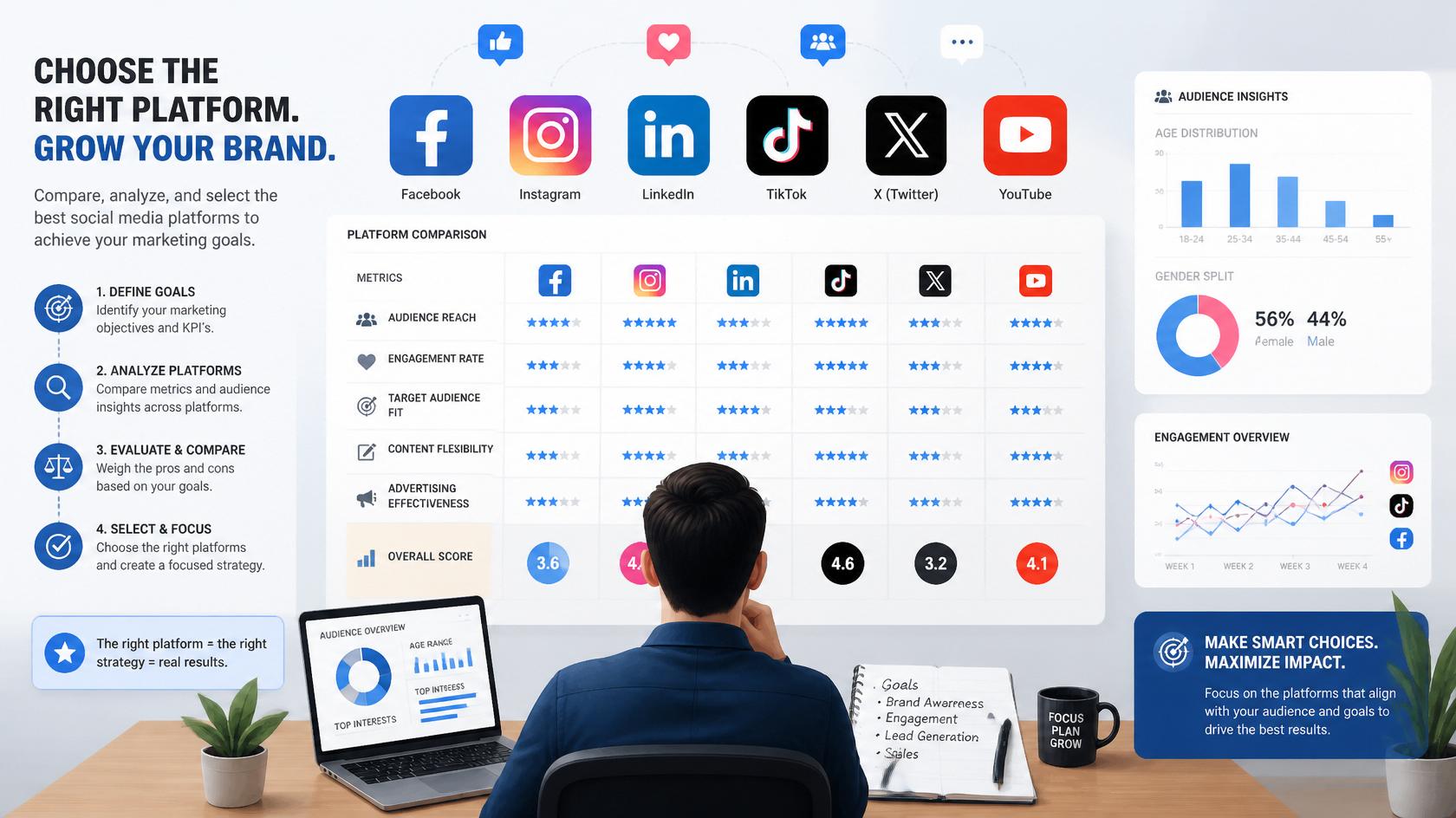
In today’s digital world, selecting the right social media platform is vital for any business seeking a strong online presence. With a multitude of options—such as Facebook, Instagram, LinkedIn, TikTok, and other emerging platforms—understanding each platform’s unique strengths is crucial. Every social media channel has its own audience, features, and marketing opportunities. By choosing strategically, businesses can ensure their content reaches the right people and generates better engagement.
Before selecting a platform, businesses should clearly understand their target audience. Different platforms attract different types of users based on age, interests, profession, and online behavior. For example, a platform that works well for teenagers and young adults may not provide the same results for professional audiences. Analyzing customer demographics helps businesses invest their time and resources in the right place.
Facebook remains one of the largest social media platforms and provides multiple opportunities for businesses to connect with customers. Companies can use Facebook pages, groups, organic posts, live videos, and paid advertisements to promote their products and services. For example, a local restaurant can use Facebook to share menu updates, customer reviews, special offers, and upcoming events to attract more visitors.
Instagram, on the other hand, focuses heavily on visual storytelling. It is an excellent choice for brands that depend on images, videos, and creative content. Fashion brands, travel companies, beauty businesses, and fitness professionals often perform well on Instagram because they can showcase their products through attractive photos, reels, and stories. For instance, a fitness brand can share workout videos, transformation pictures, and motivational content to build a loyal audience.
Linked In is a powerful platform for professional networking and B2B marketing. It is ideal for companies that want to connect with industry professionals, share business insights, and generate professional leads. A software company, consulting firm, or digital marketing agency can use LinkedIn to publish industry reports, case studies, and expert opinions to establish credibility.
TikTok has become popular for short-form video content and creative marketing campaigns. Businesses targeting younger audiences can use TikTok trends, challenges, and engaging videos to increase brand awareness. However, companies should carefully evaluate whether the platform matches their audience and marketing goals before investing time into it.
Another important factor when choosing a social media platform is understanding its features. Each platform offers different tools that can support marketing objectives. Facebook provides event promotion and community-building features, Instagram offers stories and reels, LinkedIn supports professional networking, and TikTok provides opportunities for viral content.
For example, a financial consultancy may achieve better results on LinkedIn by sharing educational articles and professional advice, while a clothing brand may gain more engagement on Instagram through product photos and influencer collaborations. The right choice depends on business goals, audience preferences, and content strategy.
Businesses should also regularly analyze their performance using social media analytics. Tracking metrics such as engagement rate, reach, website traffic, and conversions helps determine which platforms are delivering the best results. A platform that performs well today may require adjustments in the future as audience behavior and digital trends change.
In conclusion, choosing and evaluating social media platforms is not a one-time decision. It requires continuous research, testing, and improvement. By understanding audience needs, exploring platform features, and measuring results, businesses can create an effective social media strategy. Selecting the right platform allows brands to build stronger relationships, increase visibility, attract potential customers, and achieve long-term growth.